Ask any experienced pickleball player what separates beginners from intermediate players, and they’ll give you the same answer: dinking. The dink — a soft, arcing shot that lands in or near the non-volley zone (the kitchen) on the other side of the net — is the backbone of high-percentage pickleball. It’s the shot that dictates pace, frustrates opponents, and creates the openings you need to win points.
If you’ve been relying on hard drives and hoping for errors, this guide is for you.
What Is a Dink, Exactly?
A dink is a low, controlled shot hit from near the kitchen line that lands in the opponent’s kitchen. It travels in a shallow arc — just clearing the net — and bounces low, making it extremely difficult to attack. The whole point is to keep the ball below net height on your opponent’s side, which forces them to hit upward and limits their power options.
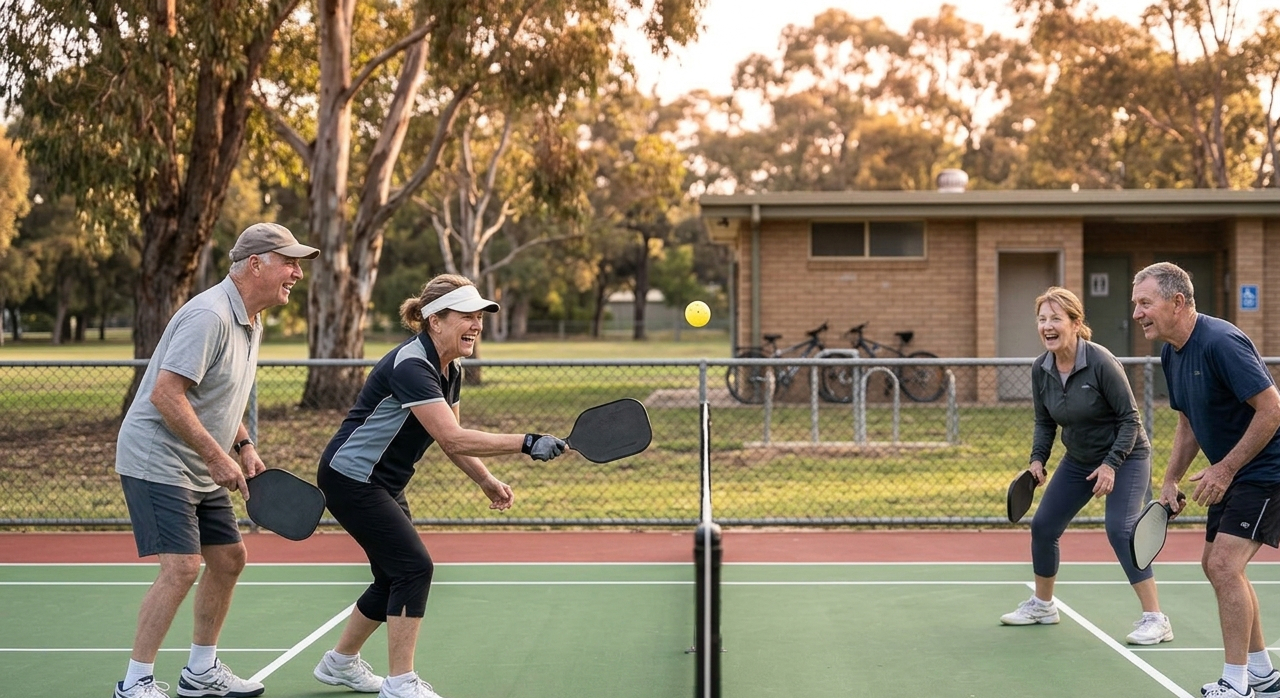
At its best, dinking is a battle of patience and positioning. Two teams stationed at their respective kitchen lines exchange soft cross-court or straight shots, each waiting for the other to pop one up or shift out of position. When that happens, the attacking team pounces with a speed-up or put-away. Until then, the dink rally continues.
The Basic Technique
Good dinking starts with your stance. Stand close to the kitchen line — within a step of it — with your feet roughly shoulder-width apart and your knees slightly bent. Keep your weight balanced and forward, not back on your heels.
Your grip pressure matters more than most beginners realise. Dinking calls for a relaxed grip — imagine holding a small bird: firm enough not to drop it, light enough not to hurt it. A tight grip kills feel and produces erratic shots.
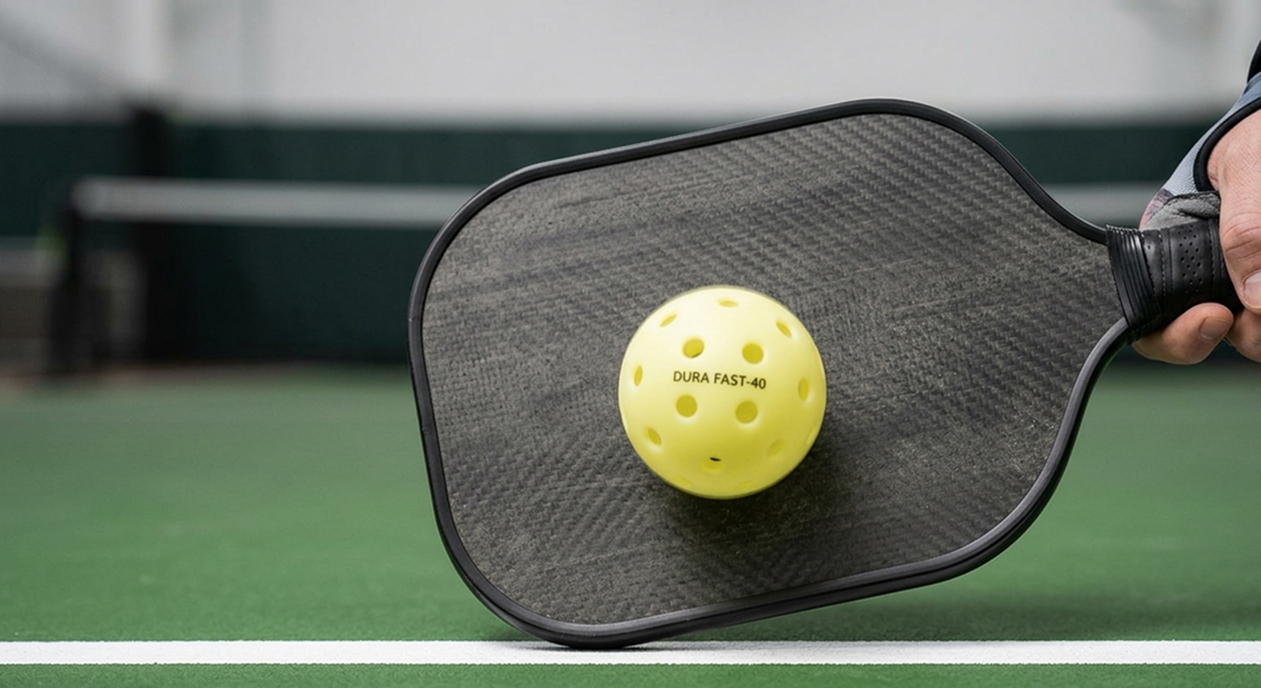
For the swing itself, think of pushing rather than hitting. Use your shoulder to initiate movement, keep your wrist firm, and guide the paddle face through the ball. The swing is compact — there’s no backswing or follow-through like a drive. Contact point is ideally out in front of your body, around waist height or just below.
The paddle face should be open slightly at contact, giving the ball the lift it needs to clear the net. Many players who struggle with dinks either close the face (driving the ball into the net) or scoop upward excessively (producing a floaty ball that invites an attack).
Cross-Court vs. Straight Dinks
Cross-court dinking is the foundation. The geometry of pickleball works in your favour here: a cross-court shot travels over the lowest part of the net (the centre is lower than the sides), and your ball needs to travel a longer horizontal distance, which gives it more margin to drop safely into the kitchen. Start most dink exchanges cross-court and default back to it when under pressure.
Straight dinks — hit directly at the opponent across from you — are shorter and therefore faster. They leave less reaction time, which makes them useful for testing composure or creating an angle. But they carry higher risk because they travel over the higher part of the net and have less court to land in.
The switch from cross-court to straight, or vice versa, is where many points are created. A well-timed change of direction catches opponents leaning the wrong way and opens up the sideline.
Body Dinks and the “ATP” Trap
Advanced opponents will frequently dink at your body — aimed at your hip or shoulder — rather than to a corner. This is effective because it reduces your swing space and forces a decision: backhand or forehand? Hesitation costs you clean contact.
The answer is to move. Step to the side to give yourself room to take the ball comfortably. Players who try to flick a jammed ball often produce exactly the pop-up their opponent was hoping for.
On the other end of the creativity spectrum: the “Around the Post” shot (ATP) happens when an opponent’s dink drifts wide and you’re able to hit the ball around the net post rather than over it, with no net to clear. It’s spectacular when it works, but treat it as a bonus shot rather than something to manufacture.
Positioning During Dink Exchanges
The most common mistake during dink rallies is drifting back from the kitchen line. Every step back that you cede gives your opponent a bigger target and more court to aim at. Stay glued to the line.
If your opponent moves you wide with an angle, reset to the centre after returning the shot. Leaving one side open — especially your backhand corner — is an invitation to be put away.
In doubles, court coverage during dink rallies is a partnership conversation. If you’re pulled wide to chase a sharp angle, your partner should slide to cover the exposed side. These small adjustments, done consistently, are what separates organised doubles teams from those who simply hope the ball goes to their opponent.
Four Drills That Actually Help
1. The 50-ball cross-court drill. Stand at the kitchen line with a partner and hit 50 consecutive cross-court dinks. Compete on longest unbroken rally. The discipline of counting forces you to stay controlled rather than trying flashy angles.
2. Solo wall practice. Find a wall and chalk or tape a target roughly 90cm high and a metre wide. Practice dinking to the target at varying paces. This is underrated for developing paddle-face consistency — a wall doesn’t forgive poor contact.
3. The body attack drill. Have a partner feed dinks alternately to your forehand, backhand, and body. Focus on footwork — stepping out of the way of body shots rather than jabbing at them. Run two minutes on, then swap.
4. Speed-up recognition. This is advanced but important: have a partner randomly speed up one dink in every 10. Your job is to block it back defensively, then re-establish the dink exchange. Learning to reset after a speed-up rather than trying to counter-attack is one of the biggest skill jumps in the game.
Building Patience Into Your Game
Many newer players find dinking frustrating because it feels passive. Nothing is happening. You’re just pushing the ball back and forth while waiting for something. That discomfort is the point — the player who stays patient longer tends to win.
The mindset shift that helps most is this: you’re not “waiting” during a dink rally, you’re applying pressure. Every controlled dink keeps your opponents pinned to the kitchen, limits their options, and increases the likelihood that they’ll lose focus and produce an attackable ball. Patience is the pressure.
This is also why dinking practice pays dividends faster than any other part of the game. An extra 15 minutes on dinks each session — boring as it might seem — compounds quickly. Within a few months you’ll notice rallies feeling slower, opponents’ mistakes more predictable, and your own shot selection markedly cleaner.
Where to Start Practising
The fastest way to improve your dink is to find a regular kitchen-line session with players slightly better than you. Most pickleball clubs in Australia run open social play — typically $10–20 per session — where you can request a focused dink warm-up before games begin. Indoor courts are ideal for this because the ball bounces more predictably and wind isn’t a factor.
Browse the Australian pickleball court directory to find clubs and venues near you. If you’re in a major city, check your local state and city listings for venues with coaching programs or structured beginner sessions, where dink fundamentals are usually covered in the first few lessons.
The dink won’t feel natural the first hundred times you hit it. Then it will. And once it clicks, you’ll understand why the players who control the kitchen control the game.