Pickleball is growing fast across Australia, and so is the club scene. Whether you have played a few casual sessions at a recreation centre and want something more structured, or you are brand new to the sport and wondering how to meet people, joining a club is the single best step you can take. This guide explains how Australian pickleball clubs are organised, what membership actually gets you, and how to find one near you.
Clubs vs. Casual Courts — What Is the Difference?
When most people start pickleball, they book a casual court at an indoor sports centre, show up, and hit with whoever they came with. That works fine, but it has limits. You are paying per session, you have no consistent group to improve alongside, and there is no one around to correct your grip or explain why your dink keeps flying long.
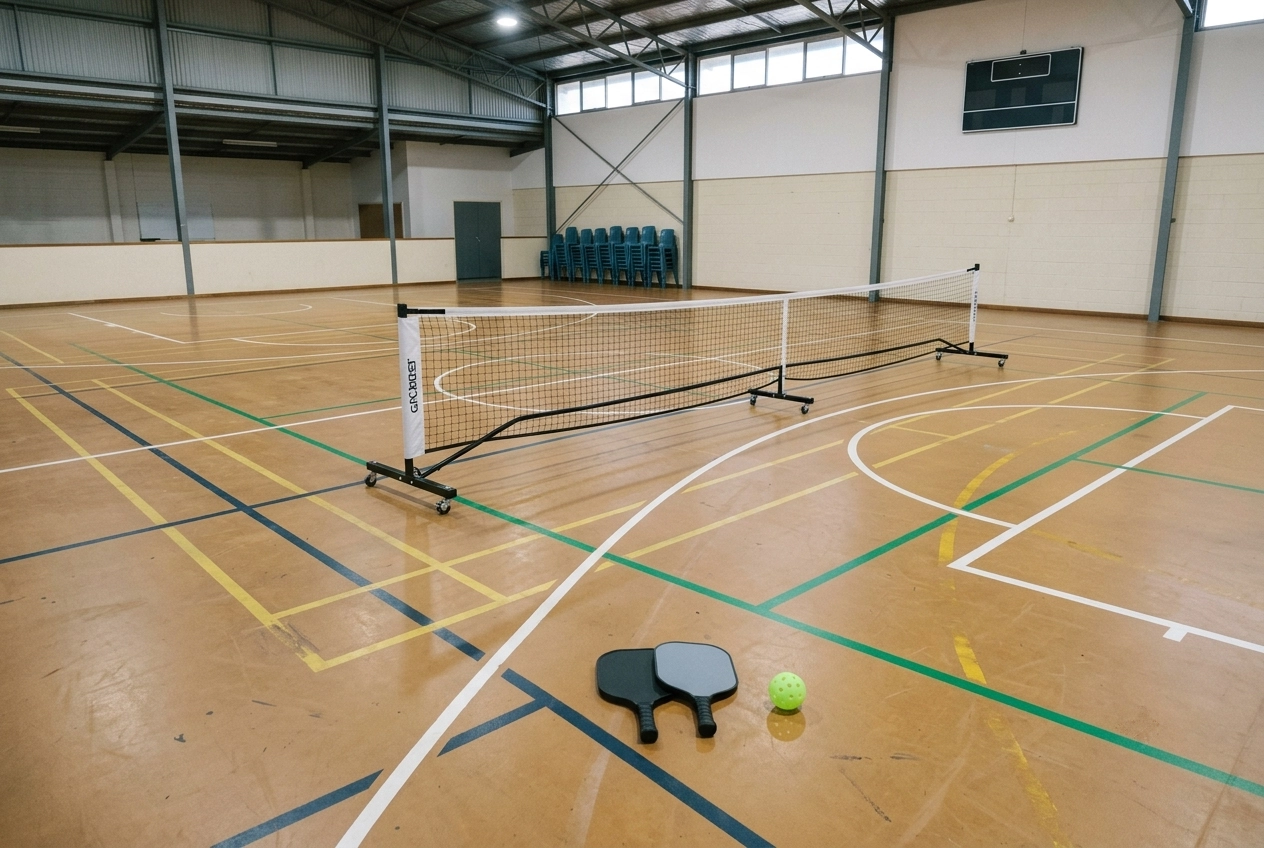
A pickleball club is different in almost every way. Clubs typically lease dedicated court time — often at a leisure centre, tennis facility, or purpose-built indoor venue — and sell that time to members in bulk. You pay an annual or quarterly membership fee, and in return you get access to regular social sessions, organised round-robins, coaching clinics, and a standing community of players who know your name.
The courts themselves are often the same courts you could book casually, but the experience around them is entirely different.
What Membership Typically Includes
Club structures vary, but most Australian pickleball clubs offer some combination of the following:
- Regular social sessions: Two to four sessions per week, usually running two to three hours each. These are open play formats where you rotate partners and opponents throughout the session.
- Graded play: Many clubs now split sessions by skill level — beginners play separately from intermediate and advanced players, which makes the game better for everyone.
- Coaching access: Some clubs include a monthly clinic in the membership fee; others offer coaching at a reduced member rate ($15–30 per clinic rather than full casual pricing).
- Competition entry: Club-level round-robins and interclub competitions, plus priority access to state and national tournaments.
- Equipment loan: Smaller clubs often have a set of loaner paddles for new members who have not yet bought their own.
Annual membership fees across Australia typically sit between $80 and $200 depending on the club’s size, facilities, and how much court time is bundled in. On top of that, some clubs charge a small session fee of $5–12 each time you play to cover court hire costs. Others include unlimited court time in the annual fee. Always ask before you join so you understand the total cost.
What to Expect at Your First Club Social
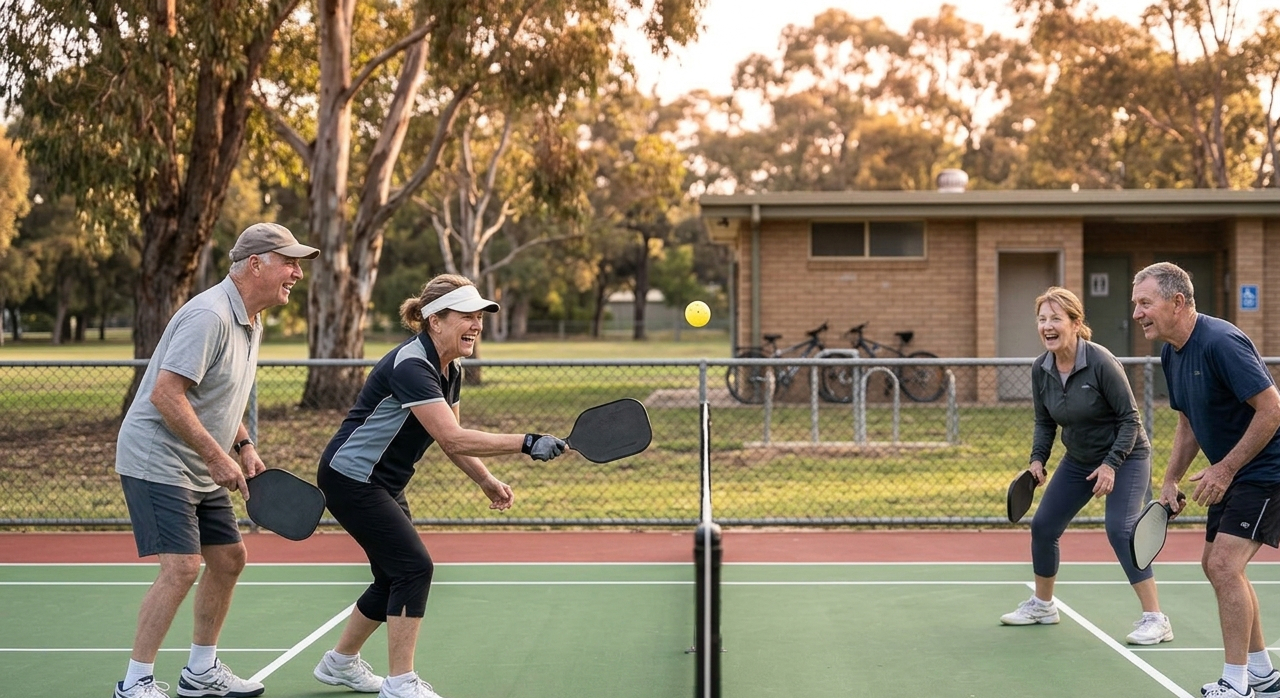
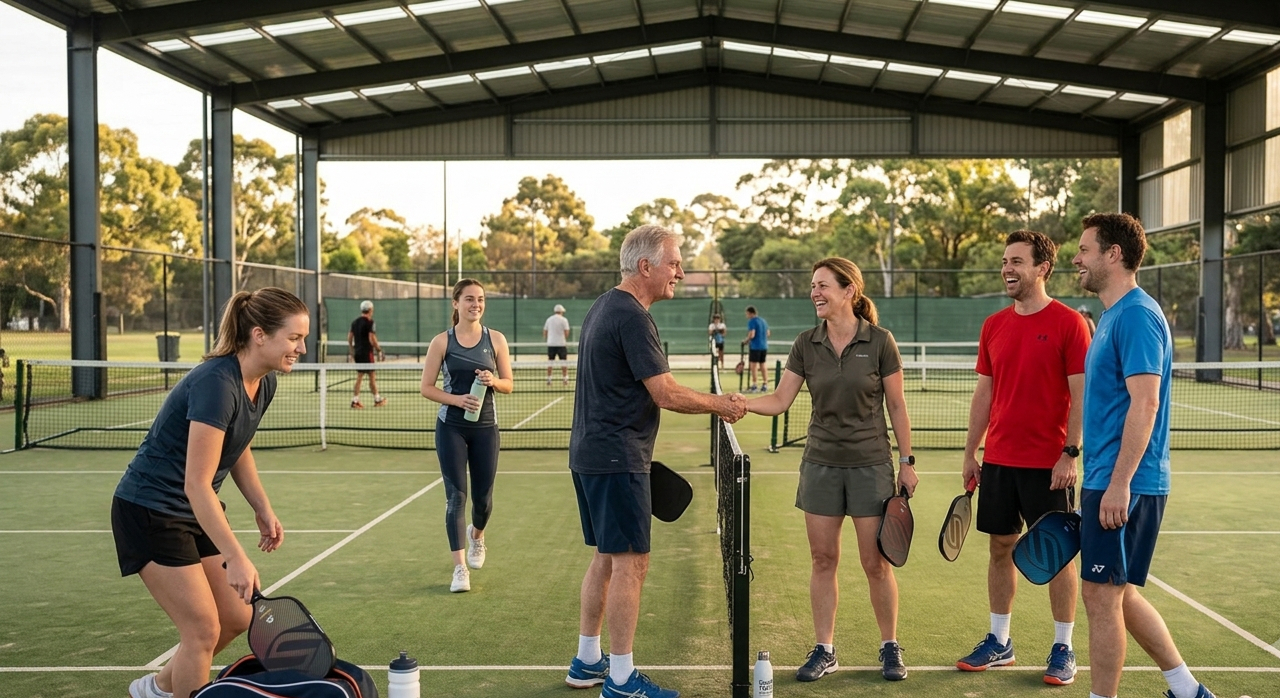
Walking into a club session for the first time can feel intimidating, particularly if everyone else seems to know each other. The reality is that Australian pickleball clubs are almost universally welcoming — the sport itself attracts people who enjoy the social side as much as the competition.
A typical club social session works like this: you arrive, put your name on a rotation board, and wait for an open court. When a game finishes, the four players rotate and new players come on. You might play with three different partners in the first hour. There is usually a tea break mid-session where people chat, and most clubs have at least one experienced player who will help newer members with the basics if asked.
Wear comfortable court shoes with lateral support — running shoes are fine to start, but dedicated court shoes make a noticeable difference once you are playing more than once a week. Bring water and expect to sweat.
Finding a Club Near You
The easiest way to find a club is to search the Pickleball Australia court directory, which lists facilities across the country along with contact details and session information. Most listings include whether a venue hosts regular club sessions or is strictly casual hire.
If you live in a major city, you likely have several options within a reasonable drive. Sydney, Melbourne, Brisbane, and Perth all have active clubs running multiple sessions per week across a range of skill levels. Regional areas are catching up quickly — many tennis clubs in country towns have added pickleball lines to their courts and now run dedicated sessions.
Pickleball Australia (the national body) maintains a club finder on their website, and state associations in New South Wales, Victoria, and Queensland also list affiliated clubs. Facebook groups are worth checking too — most active clubs post session updates and new member information there, and you can often ask to try a session before committing to membership.
Clubs for Beginners
If you have never played before, look for a club that explicitly offers a beginners’ morning or introduction clinic. These are usually 90-minute sessions where an experienced player walks a small group through the rules, basic strokes, and court positioning. They tend to run on weekday mornings and cost $15–25 as a one-off, often including paddle loan.
After one or two of those, you will have enough to hold your own in a standard social session. Do not worry about your skill level holding others back — good clubs manage court rotations so that newer players get useful experience rather than being outgunned every rally.
Clubs for Competitive Players
If you already have some experience and want to play more seriously, look for clubs affiliated with your state association and ask whether they field interclub competition teams. Competitive club membership often includes access to graded weeknight sessions, regular matchplay practice, and assistance entering sanctioned tournaments.
Indoor clubs with six or more courts tend to offer the best competitive programmes, simply because they can run multiple skill-level sessions simultaneously without crowding. Membership fees at performance-focused clubs can run higher — $150–250 per year — but usually include more court time and structured competition.
Questions to Ask Before You Join
Before paying a membership fee, it is worth asking a few direct questions:
- How many sessions per week are included, and when do they run?
- Are sessions skill-graded, or is it open to all levels?
- Is coaching available, and is it included or extra?
- What is the session cap — how many players are allowed per session?
- Is there a trial session available before committing?
A well-run club will answer all of these without hesitation.
Where to Start
The best first move is to browse the pickleball courts near you and look for venues that host regular club sessions rather than casual hire only. Click through to the listing for contact details, then reach out directly or check the club’s social media pages for session schedules. Most clubs welcome a first visit before you commit to membership — show up, say you are new, and you will find out quickly whether it is the right fit.
Pickleball in Australia is genuinely one of the friendliest sporting communities going. Finding a club is the fastest way to go from hitting a ball around once a fortnight to playing three times a week and wondering how you ever spent a Sunday any other way.