If you’re over 55 and you haven’t heard of pickleball yet, you will soon. Across Australia, community centres, tennis clubs, and indoor sports facilities are converting courts, running dedicated senior sessions, and filling them to capacity within weeks. The sport has a reputation for being easy to pick up — and that’s true — but what keeps older players coming back is something more than just ease. It’s the combination of genuine physical challenge, tactical depth, and a social scene that is genuinely hard to replicate in most other sports.
What Makes Pickleball Different for Older Players
Pickleball is played on a court roughly a quarter of the size of a tennis court, which immediately solves one of the biggest barriers for older athletes: coverage. You don’t need to sprint sideline to sideline. The smaller court means most of the action happens within five or six metres of the net, and the non-volley zone — commonly called the “kitchen” — actually rewards patience and placement over power. Brute force matters far less here than it does in tennis or squash.
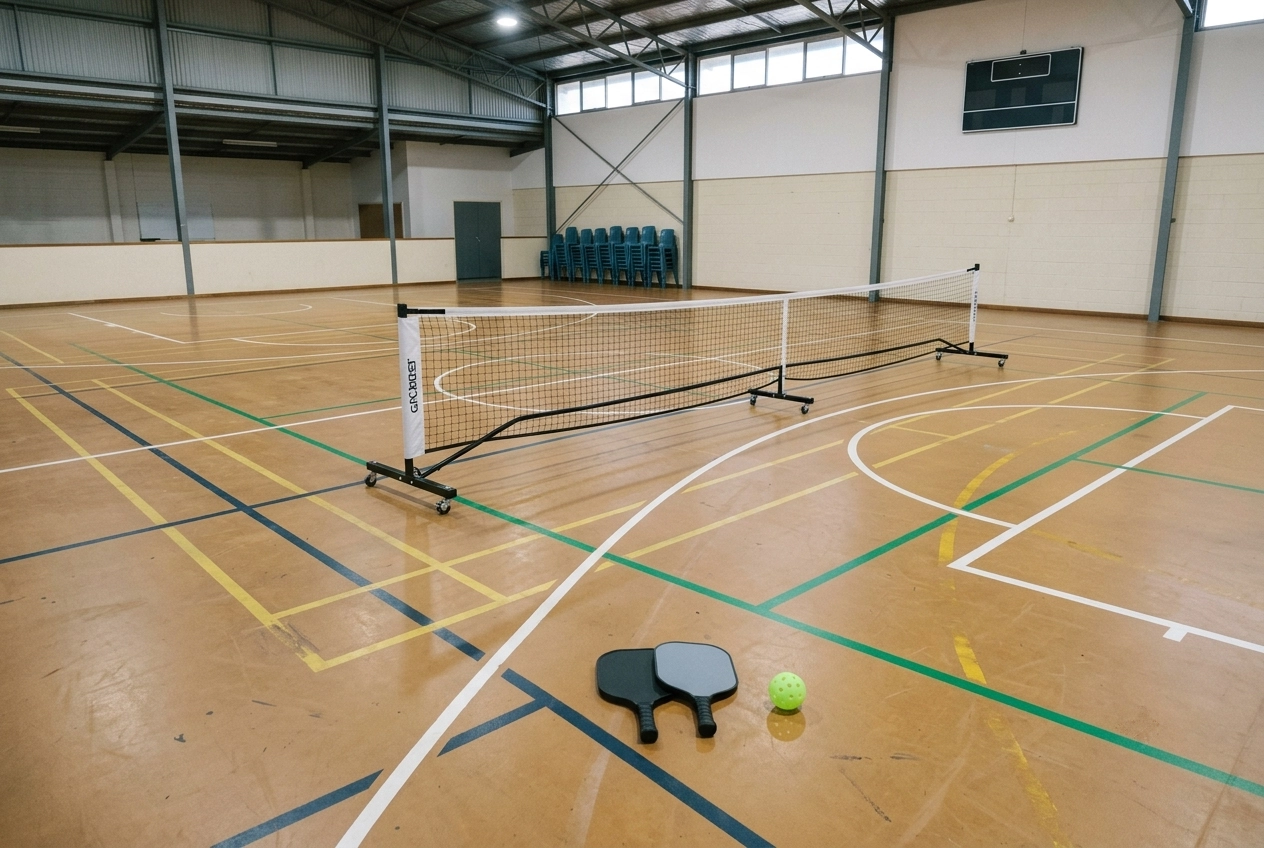
The equipment plays a role too. The paddle is solid rather than strung, which means there’s no timing an off-centre hit on a moving string bed. The plastic ball travels significantly slower than a tennis ball. Combined, these factors produce a sport where a 68-year-old who hasn’t competed since their club tennis days in the 1980s can be genuinely competitive within a few weeks of picking it up.
Physiotherapists who work with older athletes have taken notice. The repetitive overhead serving motion common in tennis is replaced by an underarm serve, which is considerably easier on the shoulder. The stop-start running pattern is less intense, and the low-impact nature of the movement makes it accessible for players managing knee or hip concerns. That said, it’s not a gentle stroll — you’ll raise your heart rate, work your core, and improve your hand-eye co-ordination in ways that matter for long-term health.
The Social Side Is the Point
Ask most senior pickleball players what they love about the game, and within 30 seconds they’ll stop talking about the sport itself and start talking about the people. This is by design.
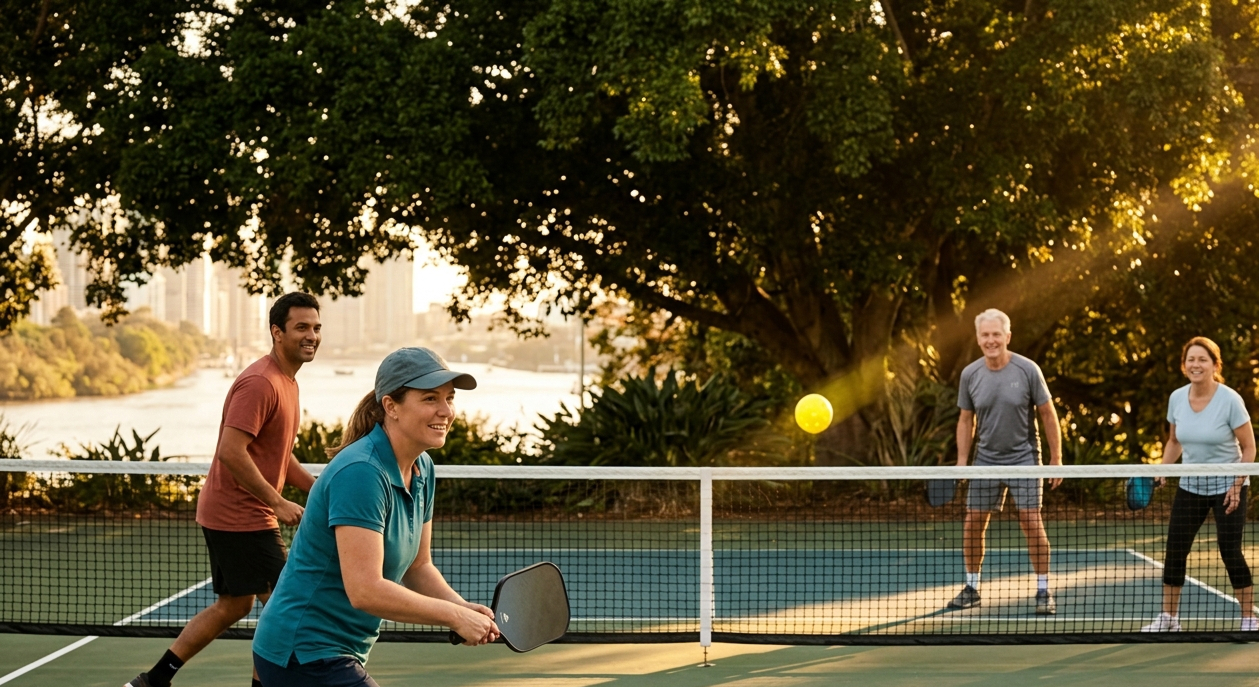
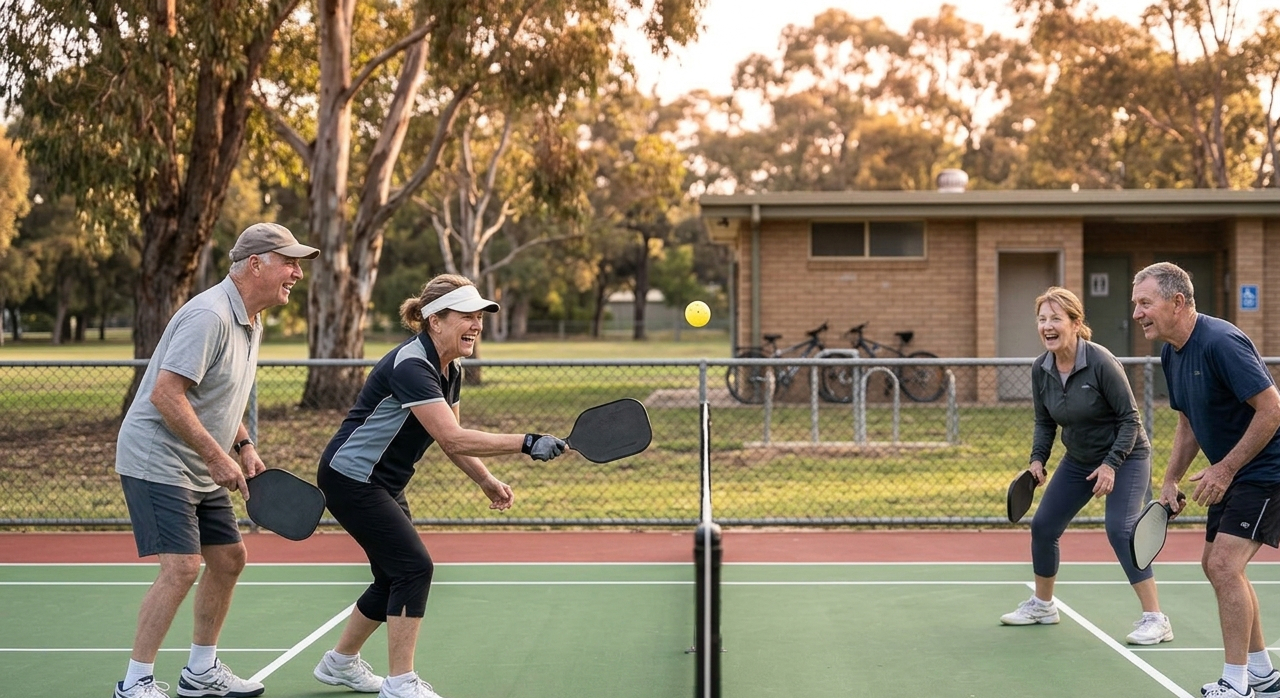
Recreational pickleball is almost always played in a rotational format: you play a game of 11 points, then one pair rotates off and two new players rotate on. That means over the course of a two-hour session, you’ll play with and against eight to twelve different people. You don’t arrive as a pair and stay isolated in your own match — the format forces mixing, conversation, and the kind of good-natured rivalry that builds community fast.
This matters particularly for older Australians who may be retired or semi-retired and looking for regular social connection alongside physical activity. Dedicated senior sessions at many venues run two to three mornings per week, often from 8am to 10am, which suits people who have flexible schedules. Casual session fees typically run between $8 and $20 per person, and most venues that cater to seniors have equipment to borrow so you don’t need to invest upfront.
What to Expect in Your First Few Weeks
Most people feel the basic rhythm of a pickleball rally within the first 30 minutes. The learning curve isn’t steep. Within a session or two, you’ll understand the scoring, the kitchen rules, and the basic shots. Within a month of regular play, you’ll start developing preferences — a softer dink game, a solid third-shot drop, a reliable cross-court angle — and that’s when the tactical depth starts to reveal itself.
It’s worth finding a session that explicitly caters to beginners or seniors, particularly in the early weeks. Many experienced players are welcoming and happy to explain rules during a game, but there’s real value in a structured beginner clinic where a coach can give you foundational technique before bad habits set in. Expect to pay between $25 and $45 for a beginner clinic session, which is comparable to a tennis group lesson.
Once you’re comfortable with the basics, most dedicated senior sessions operate on an open drop-in basis. You turn up, put your paddle in the queue, and get matched into a game. The social fabric of these sessions develops quickly — within a fortnight, you’ll likely know most of the regulars by name.
How Competitive Can It Get?
This is a question many people don’t think to ask, but it matters. Pickleball in Australia has a proper competitive structure through Pickleball Australia, with graded divisions that accommodate everyone from first-year players to national-level competitors. Within many senior social groups, an informal skills stratification develops naturally — you’ll find players starting to seek out opponents of similar levels, and local club tournaments for seniors are now running in most capital cities.
For those who want a competitive outlet without full-blown tournament play, graded ladders at club level offer a middle ground. You can compete meaningfully, track your progress, and find evenly matched opponents, all within a relaxed club environment.
The point is: the pathway exists. You don’t have to stay in purely social play if you don’t want to.
What to Look For When Choosing a Venue
Not every pickleball facility is the same, and it’s worth spending a bit of time finding the right fit rather than defaulting to the nearest option.
Start by checking whether a venue runs dedicated senior or over-55 sessions, rather than just general open play. Dedicated sessions tend to have a more balanced skill range and a more consistent community. Look for facilities with at least four to six courts — this ensures you won’t be waiting long between games during a busy session.
Indoor facilities are particularly worthwhile during winter months or in cities with unpredictable weather. Proper cushioned or sport-specific flooring also reduces joint stress compared to hard concrete, which is worth asking about before you commit to a membership or regular attendance.
Parking matters more than it might seem. Pickleball bags and paddle cases are cumbersome, and lugging equipment from a distant car park is an unnecessary friction point that discourages attendance in the long term.
If you’re in a capital city, you’ll find multiple facilities to choose from. Browse the pickleball courts directory to see what’s available in your area, filter by features like indoor facilities or dedicated senior programming, and read what other players have said about their experiences at each venue.
Where to Start
The most common thing that holds people back is simply not knowing where to go. That problem is now very solvable. There are dedicated senior pickleball sessions running across every Australian state, many within 20 minutes of most suburban addresses in capital cities.
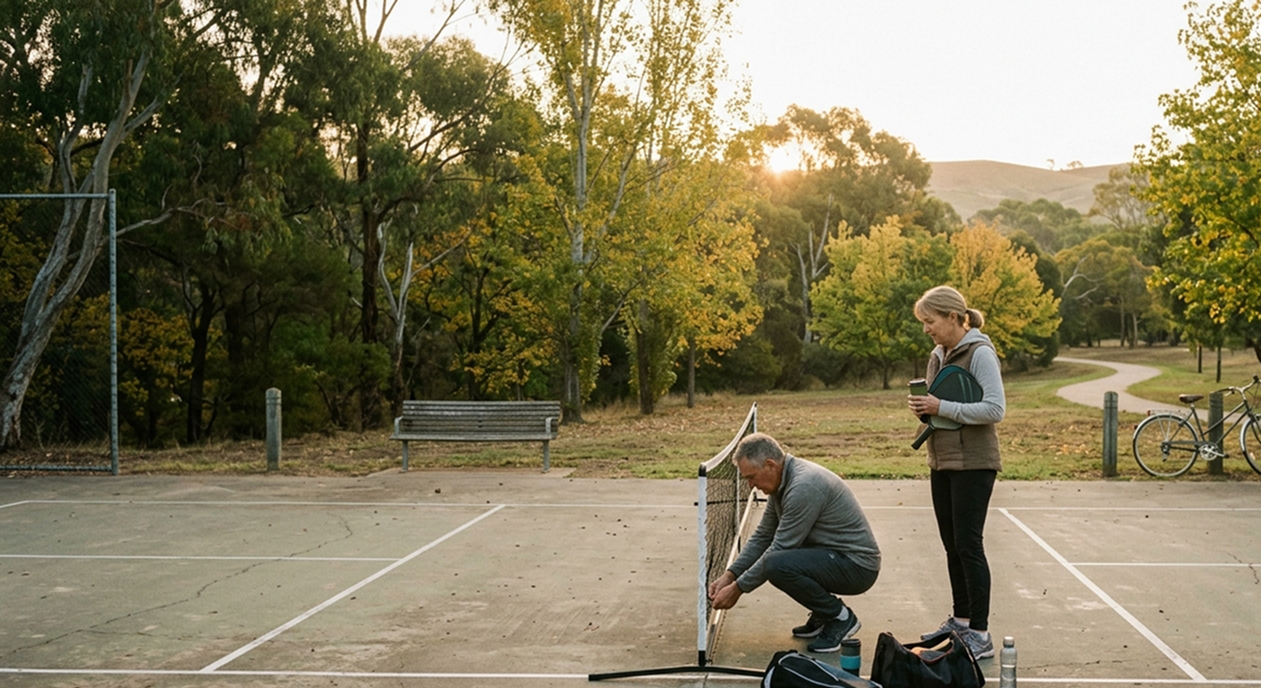
The practical first step: browse the directory for courts near you, identify one that runs morning sessions or explicit beginner or senior programming, and show up once. Bring comfortable cross-training shoes — tennis shoes work well — and expect to be welcomed. Most senior pickleball communities are actively looking for new players. The courts fill up fast, and the communities have learned that growth is good for the sport and good for the friendships it generates.
If you want to narrow it down by city, the directory lets you filter by location and session type. Whether you’re in Sydney, Melbourne, Brisbane, Perth, or regional Australia, there’s almost certainly a game running near you that would be glad to have you.
The barrier to entry is genuinely low. The ceiling — socially, physically, competitively — is higher than most people expect. That’s the combination that makes pickleball work so well for older Australians, and it’s why courts that opened with a single session per week are now running five.