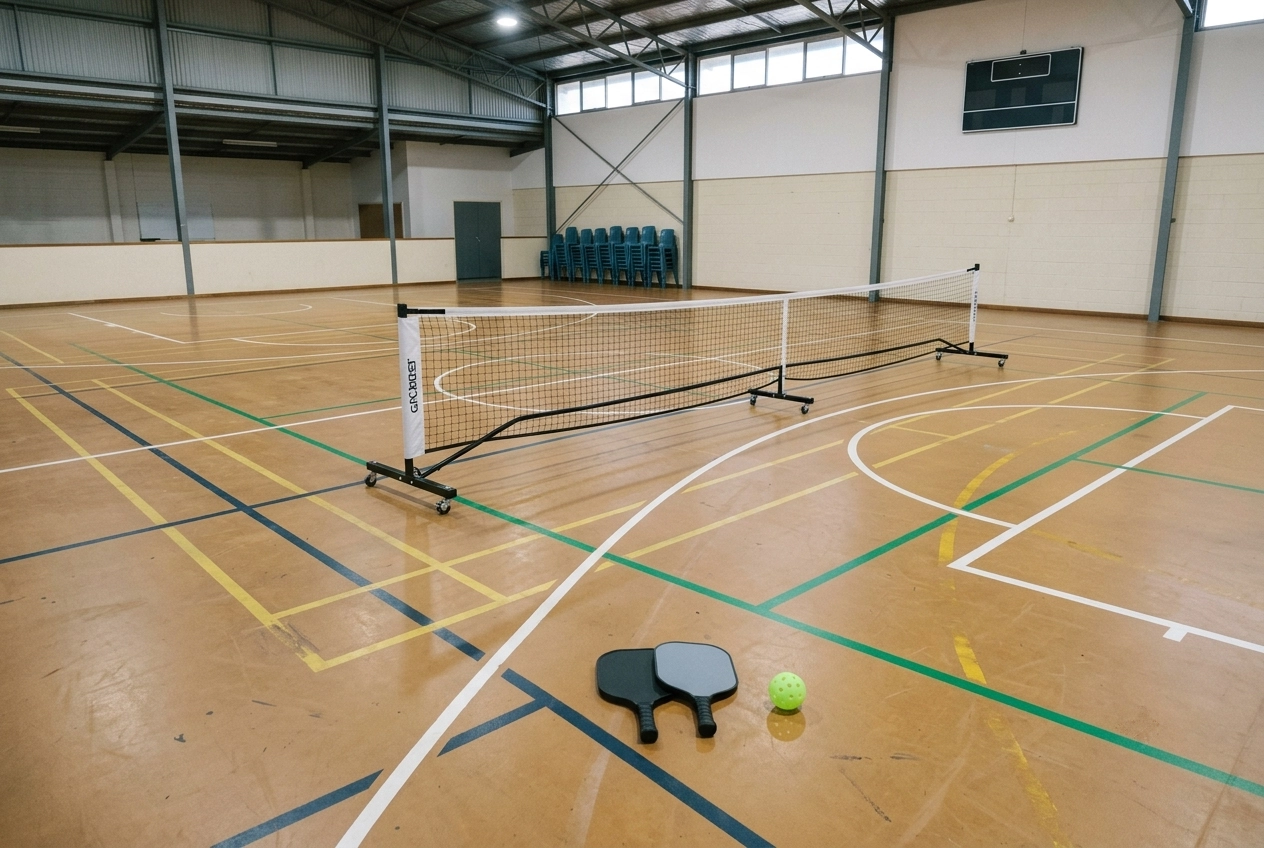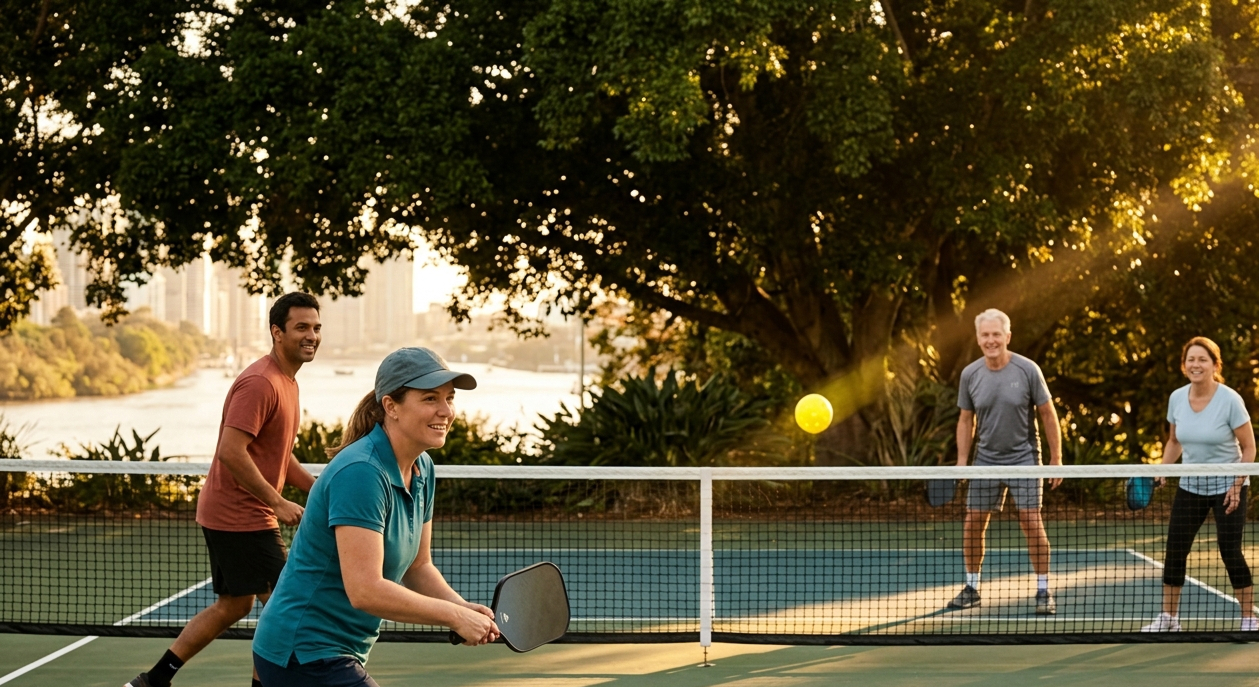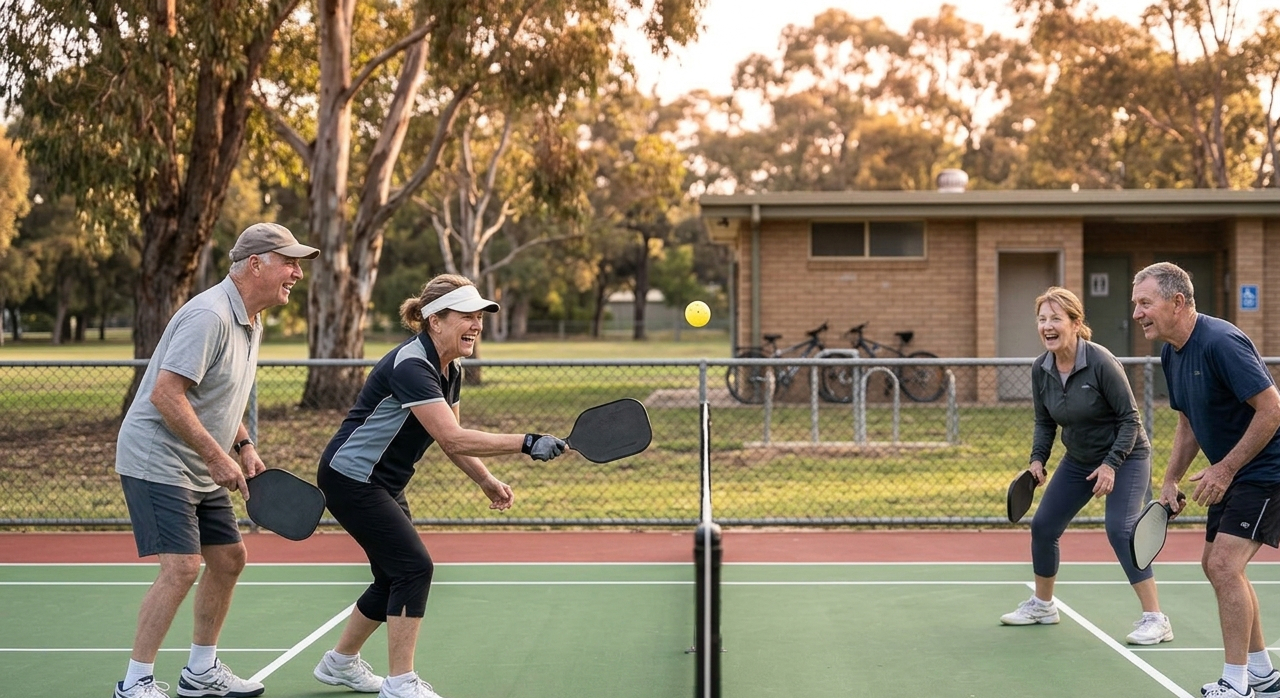

Your paddle is the one piece of gear that shapes how the game feels in your hand, so it pays to understand what you are buying before you spend. The good news is twofold. You do not need an expensive paddle to start, and in Australia you do not need to buy one at all to begin with, because plenty of dedicated venues hire out paddles for a few dollars a session. This guide covers weight, grip, materials and shape, then points you to real courts where you can test all of it before parting with any money.
Start with weight
Weight is the first thing you will notice and the factor that affects play the most. Pickleball paddles generally fall into three bands, usually quoted in ounces because most brands are American.
- Light (roughly under 7.3 oz / 207 g): quicker to swing and easier on the wrist and elbow. Good for fast hands at the net and precise placement. The trade-off is less natural power, so you supply more of the drive yourself.
- Midweight (about 7.3 to 8.4 oz / 207 to 238 g): the sensible middle ground and where most players land. A reasonable blend of control and power without the downsides of either extreme.
- Heavy (above 8.4 oz / 238 g): more power and stability, with the paddle pushing through the ball for you. The cost is slower reactions at the net and more strain on your arm over a long session.
If you are unsure, start midweight. It forgives indecision and lets you work out your style before you commit to a preference. Players with any history of tennis elbow or wrist trouble often do better on the lighter side.
Grip size matters more than people think
A grip that is too large is hard to manoeuvre and can contribute to arm fatigue and injury. Too small and you tend to over-grip, which tires your hand. Grip circumference on pickleball paddles usually sits between about 4 inches and 4.5 inches (10.2 to 11.4 cm).
Two quick home methods get you close.
- Ruler test: open your playing hand and measure from the middle crease of your palm to the tip of your ring finger. That measurement in inches is a good starting grip size.
- Finger test: hold a paddle in a normal grip, then see if the index finger of your other hand fits in the gap between your fingertips and the base of your thumb. A snug fit is about right. No room means the grip is too small; loose room means it is too big.
When in doubt, choose the smaller grip. You can build a grip up with an overgrip wrap, but you cannot shave one down. Many players add an overgrip anyway for comfort and to soak up sweat in an Australian summer.
Core and surface materials
Modern paddles are built around a honeycomb core with a thin face bonded to each side. Understanding both layers helps you read product descriptions.
The vast majority of paddles today use a polymer (plastic) honeycomb core. Polymer is quiet, soft on contact, and offers good control, which is why it dominates the market. Older or budget paddles sometimes use Nomex (stiffer and louder, with more pop) or aluminium (light but less durable). For a first paddle, a polymer core is the safe, comfortable choice. A thicker core (often around 16 mm) feels softer and more controlled, while a thinner core (around 13 mm) gives a bit more pop at the expense of touch.
On the face, you will see three terms.
- Graphite: light and stiff, with a consistent, controlled feel and quick response. A long-standing favourite for touch players.
- Carbon fibre: durable, with a slightly textured face that helps with spin. Very popular now and available across a wide price range.
- Composite or fibreglass: a little more flexible, which gives extra power and a livelier face. Often found on more affordable paddles and a solid all-rounder.
For most beginners the surface choice matters less than weight and grip. Any of these will serve you well while you learn.
Shape and a note on rules
Standard paddles have a fairly even, rounded shape with a large, forgiving sweet spot, which is exactly what you want when starting out. Elongated paddles trade some sweet spot for extra reach and leverage, and suit players who already make consistent contact. Begin with a standard shape and revisit this later.
One practical rule to know: combined paddle length and width cannot exceed 24 inches (60.96 cm), with length capped at 17 inches (43.18 cm) under the official equipment standard. Any paddle sold for the sport will comply, but if you ever plan to enter sanctioned events, the national governing body, Pickleball Australia (pickleballaus.org), is the place to check current equipment rules.
Try before you buy
Five minutes of hitting tells you more than any spec sheet, and paddle hire in Australia is cheap enough that there is no excuse to buy blind. Dedicated centres in most states will lend or hire you a paddle, and several have pro shops on site, so you can test a borrowed midweight in real games and then compare models the same day.
- Perth Pickleball Centre in Wanneroo has nine indoor courts, paddle hire, and Come and Try sessions for newcomers. Social sessions cost $14 for 90 minutes for non-members, dropping to $10 on Tuesdays and Thursdays, so a full evening of testing a borrowed paddle costs less than most overgrips.
- Pickle Point in Milperra, in Sydney’s south-west, hires a racquet and balls for $5 a session across its 12 outdoor courts, with casual court hire from $20 per hour on weekdays before 6pm.
- PicklePlay Dingley Village in Melbourne’s south-east pairs paddle hire with an on-site pro shop across 10 indoor courts, and runs First Timers Come and Try sessions on Saturday mornings. Testing a hire paddle and then handling the retail options in the same building is the ideal buying setup.
- Pickleball Palace Sunshine Coast in Buderim hires paddles for $5 a session and also has a pro shop, with seven courts split across indoor and outdoor play so you can feel how a paddle behaves in both settings.
- The Pickleball Hive, also in Buderim, charges $4 a session for paddle hire once you are past your first three sessions, and stocks gear on site too.
When you test, resist the urge to judge on power alone. Hit some soft dinks at the kitchen line, a few serves, and a handful of quick volleys. The paddle that feels boring but predictable is usually the right one. Other players at social sessions are generally happy to let you hit with their paddle for a rally or two, which is the fastest way to feel the difference between a light graphite face and a heavier fibreglass one.
What should you spend?
Paddle pricing in Australia falls into three broad tiers. Entry-level paddles are perfectly playable and fine for your first few months. Mid-range paddles, typically a polymer core with a graphite or carbon fibre face, are where most club players settle, because the jump from entry to mid-range buys real consistency. The jump from mid-range to premium buys much smaller gains, and matters mostly to advanced players chasing specific spin or power characteristics. Skip the premium tier until your technique, not your equipment, is the limiting factor.
Sensible advice for a first paddle
A mid-priced, polymer-core, midweight paddle with a grip that fits will cover everything you need while you find your feet. Hire before you buy, test on a real court, and spend the savings on supportive shoes and a few approved balls instead.
Find a venue with paddle hire near you in our court directory, or browse the interactive map to see what is within reach of home.